Weekly EditionFRIDAY, AUGUST 14, 2026Eight Countries · Nine Desks
Curiosities Desk · Weekly Dispatch
Curiosities
The out-of-the-ordinary desk: a spider that catapults ants, a comet from another star with chemistry we have never seen, and the week the largest wind farm in the hemisphere switched on. Wonder, mystery and good news, all sourced.
The Analyst Desk · FRIDAY, JUNE 26, 2026 Edition
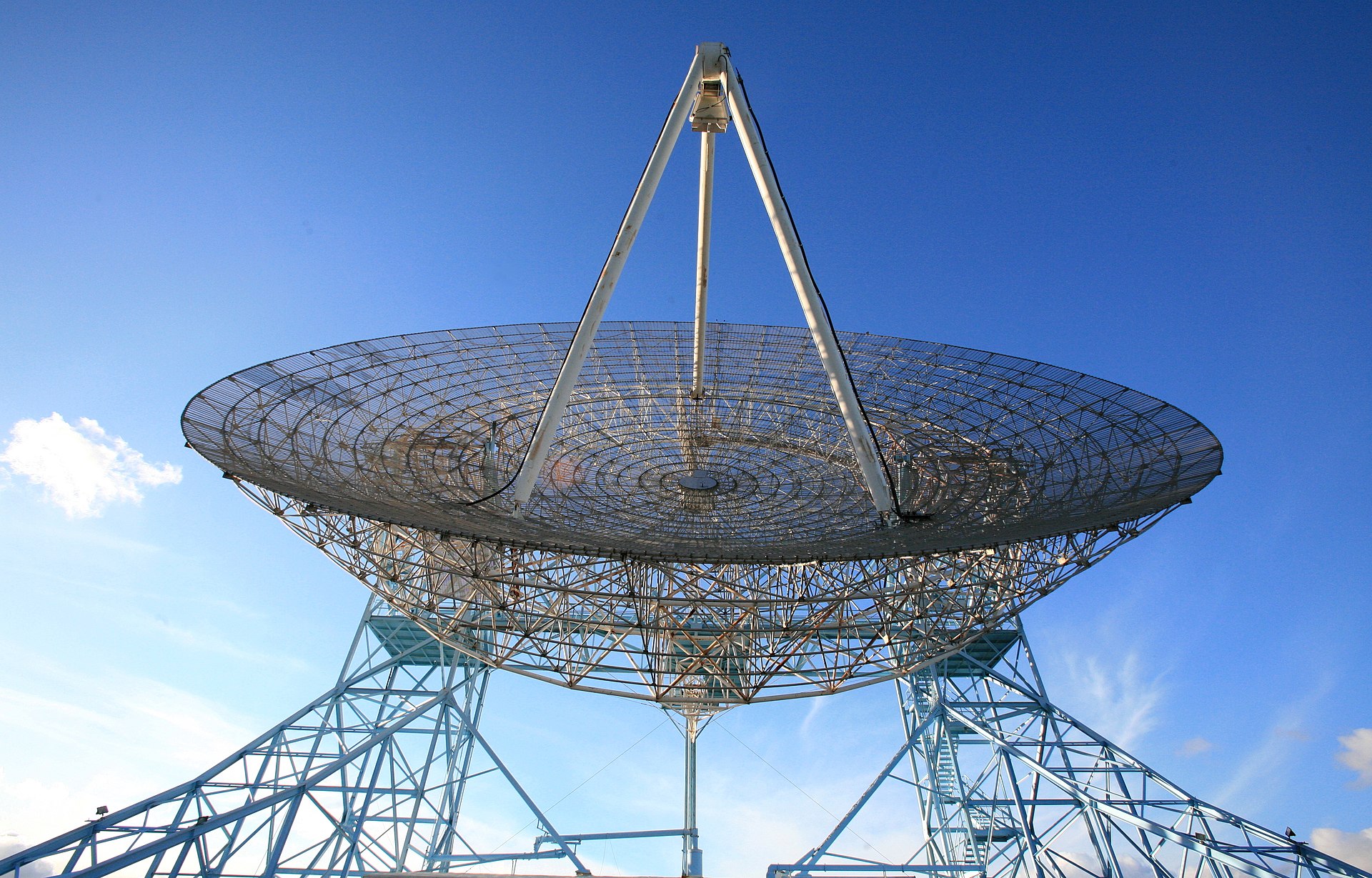
Radio telescope The Dish
Weekly Brief | Analyst Desk | 26 June 2026
This is the desk for the news that fits no map and no other section: the strange, the wonderful and the genuinely good. Everything here is real and sourced. Where a finding is early or disputed, we say so plainly, because the most remarkable stories are the ones most often exaggerated. Three parts follow: new discoveries in science and space, real mysteries that science has not yet solved, and the good news worth carrying into the week. Jump to any of them above.
At a glance
Section
What caught our eye
Science and space
A new Australian spider builds a spring-loaded trap that catapults attacking ants into its web. One of six standout finds this fortnight.
The unexplained
A comet from another star arrived carrying chemistry unlike anything in our solar system, and nobody can say which star sent it.
The bright side
England recorded zero cervical-cancer deaths among women in their early twenties, the payoff of a vaccine given to schoolgirls since 2008.
As of 26 June 2026. Every item below carries a source link, and where the science is unsettled we say how sure we are.
Science and space
A spider that catapults its prey. In rainforest near Cooktown in northern Australia, researchers described a new spider that spends up to four hours a night weaving a cone-shaped, spring-loaded snare near the ground. When a green tree ant bites the cone to attack it, the trap releases and flings the ant more than 30 centimetres up into the spider's waiting web. It is the only spider known to hunt a single species of prey, turning that ant's own aggression into the trigger. Published in Current Biology on 22 June.
Plague is thousands of years older than the cities we blamed. Ancient DNA from 46 people buried beside Lake Baikal in Siberia showed that 18 of them, nearly 40 percent, carried the plague bacterium 5,500 years ago. That is long before the crowded farming towns everyone assumed the disease needed in order to spread. It moved through small groups of hunter-gatherers, and killed children especially fast. The work appeared in Nature on 17 June.
A third galaxy with almost no dark matter, lined up in a row. Dark matter is the invisible material thought to hold galaxies together. Using the Keck telescope in Hawaii, a Yale-led team confirmed that a galaxy called NGC 1052-DF9 has roughly 100 times less of it than expected. It is the third such galaxy found in a straight line, which fits the idea that a high-speed collision between two larger galaxies tore the ordinary matter away from its dark matter and strung the debris out like beads. Published 16 June.
An amateur in the Himalayas found a galaxy shaped like a bow and arrow. Pranim Limbo, a volunteer with an Indian citizen-science project, was combing through public radio-telescope images when he spotted a structure 1.8 million light-years across shaped like a drawn bow and arrow: a galaxy falling fast into a cluster and piling up glowing plasma. The professional astronomer who leads the project said it was unlike anything he had seen in 25 years. Reported in a Royal Astronomical Society journal on 22 June.
Some butterflies barely age. Heliconius butterflies from Central and South America live up to 348 days, about 25 times longer than a close relative that lasts a fortnight, and older ones show no loss of grip strength, a sign they hardly age at all. Researchers from Bristol and the Smithsonian tie it to their unusual habit of eating pollen. Nature Communications, 16 June.
The sleeping brain keeps reading ahead. Surgeons at Baylor recorded single brain cells in seven patients who were fully under general anaesthetic while podcast clips played. The hippocampus, a memory region, kept sorting nouns from verbs and even predicted the next word before it was spoken, something long assumed to need a waking mind. Published in Nature at the end of June.
The unexplained
A comet from another star, made of something we have never seen. 3I/ATLAS is only the third object ever confirmed to have entered our solar system from beyond it. Using the James Webb Space Telescope, NASA scientists found its chemistry is wildly unlike our own comets: about 30 times more heavy hydrogen and 11 times more methane relative to water. That points to a birth 10 to 12 billion years ago in a deep freeze around some other star. Which star sent it is completely unknown. Nature, 22 June.
The universe is expanding too fast, and physics cannot say why. Two trusted ways of measuring how fast the universe is growing keep giving different answers: about 73 by watching nearby stars, about 67 to 68 from the light of the early universe. The gap is now wide enough that a June review paper calls it a real crisis. Either there is a hidden flaw in one of the measurements, or the standard picture of physics is missing something. Not a new puzzle, but it deepened again this month.
The brightest radio flash ever seen, and it will not repeat. In 2025 a Canadian telescope caught the most luminous fast radio burst on record, a fifth-of-a-second flash traced to a galaxy 130 million light-years away. The leading theory says all such bursts eventually repeat. This one has stayed silent through years of watching, and no known mechanism explains a single flash that bright. Published in the Astrophysical Journal Letters.
The Pentagon opened its UFO files, and 40 percent have no answer. Since May the United States has been releasing decades of records on unidentified phenomena. Its own review office says roughly 40 percent of the cases have no reasonable explanation. Most of the released files turn out to be drones, balloons or sensor glitches, and reviewers have called much of it underwhelming. The honest position is that a minority of cases genuinely stay open. Reported through June by ABC News and DefenseScoop.
A 5,000-year-old cave microbe resists modern antibiotics. A bacterium recovered from a 5,000-year-old ice layer in a Romanian cave shrugs off 10 antibiotics that did not exist when it froze, and its genome carries about 600 genes with no known function. How an ancient, isolated organism came to resist drugs invented thousands of years later is an open puzzle. Published in Frontiers in Microbiology and still under study.
The bright side
The hemisphere's largest wind farm switched on. On 18 June the SunZia project in New Mexico began running, the biggest wind farm in the Western Hemisphere at 3,650 megawatts, enough for roughly a million homes, after 17 years of permitting and three of construction. It is paired with a 550-mile line that carries the power west to Arizona and California.
No young woman in England died of cervical cancer for five years. A study in The Lancet on 17 June found zero deaths from cervical cancer among women aged 20 to 24 in England across 2020 to 2024, against about 23 that would have been expected without the vaccine given in schools since 2008. Part of that zero reflects how rare the cancer is at that age, but the wider fall in deaths across vaccinated groups is real and large.
A new ocean reserve the size of a country. French Polynesia announced protection for about 520,000 square kilometres of ocean, closed to industrial fishing and seabed mining while local small-boat fishing continues. It brings the territory's fully protected waters to roughly a third of its ocean, the largest single move yet toward the global goal of protecting 30 percent of the seas by 2030.
The world's mangroves have almost stopped disappearing. Mangrove forests guard coastlines from storms and lock away large amounts of carbon. A 40-year satellite study in Science found their long decline has nearly halted: the net loss is now about 1 percent, and the densest, most valuable forest is growing again, helped by legal protection and by abandoned fish ponds filling back in.
A hepatitis B cure moved a real step closer. A drug called bepirovirsen produced a functional cure, lasting control of the virus after a fixed course of treatment, in about one in five patients with chronic hepatitis B in large trials reported this month, rising to one in four for those who started with less virus. Around 254 million people live with the infection, which until now has meant medication for life. It is not yet approved.
Where this is heading
3I/ATLAS is already on its way back out of the solar system, so the race is to wring every measurement from it before it fades. More UFO files are due through the summer, and the real test is whether any of the unexplained minority survive closer scrutiny. On the brighter side, watch whether the hepatitis B result holds up on the road to approval, and whether other countries copy the ocean-protection pledges before the 2030 deadline.
How sure we are
Solid and cross-checked The spider, the plague DNA, the two galaxies, the long-lived butterflies, the wind farm, the cervical-cancer result and the mangrove study are each confirmed in a peer-reviewed journal or an official source, and most in several outlets.
Real but unsettled The expansion-rate gap and the silent radio burst are documented facts with genuinely open explanations. The interstellar comet's chemistry is measured; its home star is unknown.
Read with care The UFO releases are real, but most cases have ordinary explanations and the 40 percent figure is the government's own. The hepatitis B cure is a trial result, not an approved medicine. The cave microbe is from February and still being studied.
Sources
Checked against journals, space agencies and wire services; grouped by section.
Prepared by the News Feed analyst desk. The out-of-the-ordinary desk, checked against journals, space agencies and wire services as of 26 June 2026. Where the science is unsettled, we say so.