Weekly Brief | Analyst Desk | 14 August 2026
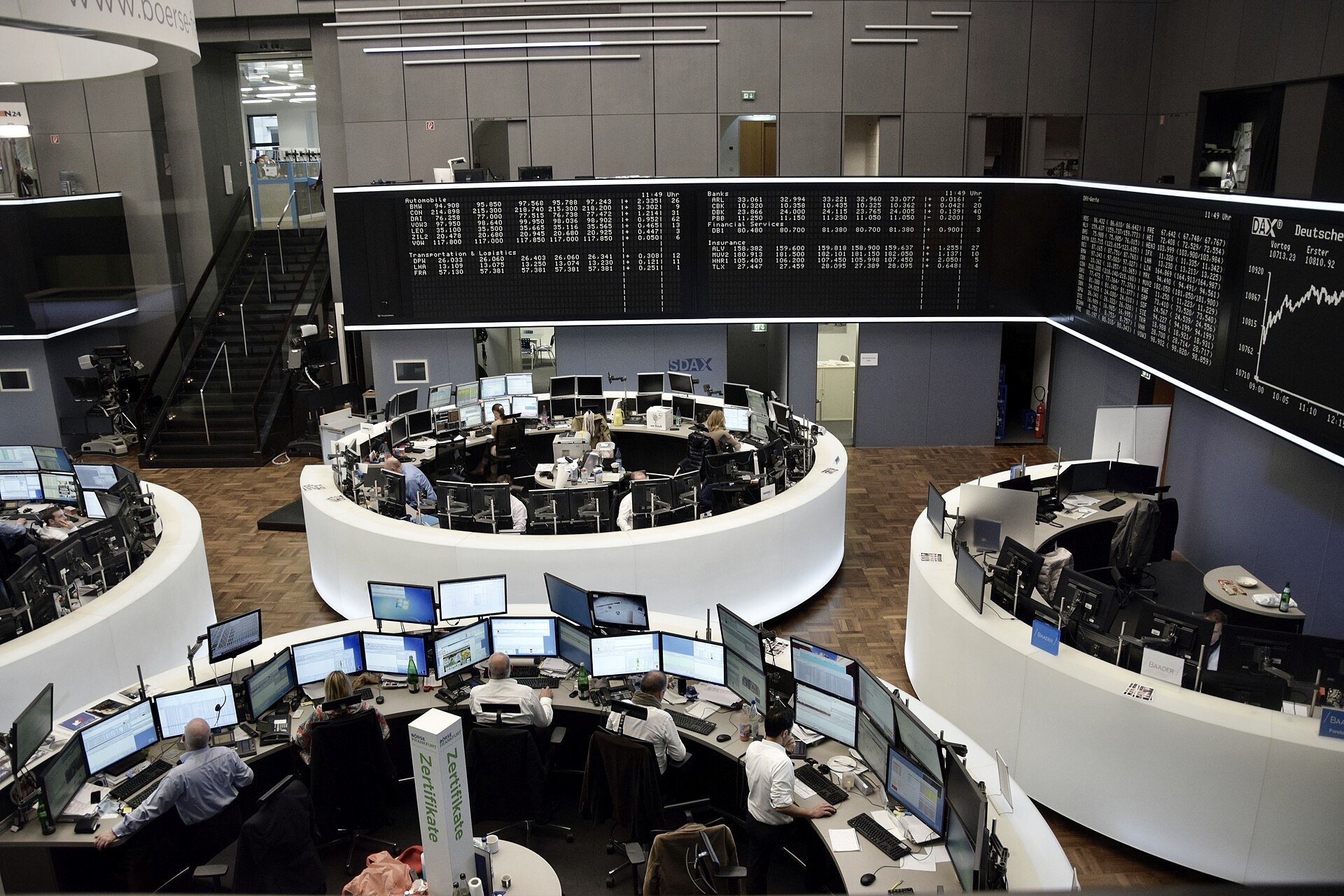
The one thing to know this week: inflation cooled just enough to push a feared Federal Reserve rate increase off the table, and Wall Street took it as license to keep making records. The S&P 500 closed Wednesday up on a tame Consumer Price Index reading, then closed Thursday at a fresh all-time high of 7,798.99, a 0.7 percent gain on the day, after July's producer prices also came in soft. The Nasdaq Composite added 0.81 percent to 26,803.03 on Thursday, now within about 1 percent of its 1 June record, and the Dow Jones Industrial Average edged up 0.13 percent to 53,839.99, holding just under the 54,000 mark it broke through the previous week. All three indexes were on pace for a third straight weekly gain heading into Friday. The catch: this was a rally built on the Fed staying still, not on the economy accelerating, and on Tuesday the same market had been falling on fresh doubts that Washington and Tehran will actually reopen the Strait of Hormuz.
Under the surface, two stories pulled in opposite directions. Alphabet, Google's parent, sank as much as 3.8 percent on Tuesday after chief executive Sundar Pichai raised the company's 2026 capital-spending forecast to as much as 205 billion dollars, with quarterly spending on artificial-intelligence infrastructure up 100 percent from a year earlier and free cash flow turning negative for the first time; investors read that as confirmation that the AI build-out is starting to cost more than it earns, at least for now. Applied Materials, the chip-equipment maker, fell more than 2 percent Thursday even as the broader Philadelphia Semiconductor Index rebounded, another sign the market is pricing individual AI-linked companies on their own numbers rather than riding the theme as a single trade. Meanwhile the VIX, the options-market gauge of expected US stock turbulence often called the fear index, closed Wednesday at 14.45, its lowest level since January and a seven-month trough, before firming only slightly into Friday; low correlation between individual stock moves is keeping the index-level reading calm even as single names swing hard.
The rate story ran through everything. July's Consumer Price Index rose 0.1 percent on the month and 3.4 percent from a year earlier, down a tenth of a point from June, while core inflation, which strips out food and energy, slowed to 2.5 percent year on year, the coolest pace since March 2021. Wholesale inflation cooled even more sharply: the Producer Price Index for final demand rose 4.7 percent year on year in July, down from 5.5 percent in June, though food costs in the pipeline jumped 8 percent, a warning that the relief may not be finished working through to shelves. Traders responded by pushing the odds of a Federal Reserve interest-rate increase at the September meeting down to roughly 32 to 33 percent, from close to a coin flip earlier in the week, according to CME's FedWatch tool. The 10-year Treasury yield, the government borrowing rate that anchors loans and mortgages worldwide, eased to about 4.65 percent on Thursday before firming back toward 4.68 percent Friday morning. Oil told a less settled story: Brent crude slipped about 1 percent toward 87 dollars a barrel Thursday on gloomier OPEC and IEA demand forecasts, yet stayed well above the low-80s levels of a week earlier, with the Wall Street Journal reporting that Gulf oil producers are now racing to build physical pipeline bypasses around the Strait of Hormuz rather than waiting on a diplomatic fix. Spot gold traded near 4,320 to 4,460 dollars an ounce through the week, extending its rally from 4,244 dollars the week before.
Away from Washington, Europe kept climbing: the Stoxx 600 gained every session last week, its longest streak since June, and has rallied roughly 11 percent this year on the back of the strongest European earnings growth in four years, even as it eased back to around 659 to 660 points this week. Prague's PX index touched a fresh intraday high near 2,810 points on Wednesday before easing to 2,785.14 at Thursday's close, still comfortably above where it started the year. Argentina held its own: the Merval closed Thursday at 3,000,582 points, defending the psychological 3-million level for a second straight session, even as the country-risk spread, the extra yield bondholders demand over US Treasuries, climbed to 473 basis points, up from 446 a week earlier. Thailand's SET spent the week testing support near 1,600 points as MSCI rebalanced two names into and two out of its Thailand small-cap index, and Russia's MOEX swung from a two-month high on Wednesday to a 3 percent one-day drop on Thursday, a reminder of how thin the market's footing still is. This brief covers the United States, Europe including Prague, Asia including Thailand and China, Argentina, Russia and Israel, the wider emerging-market gauge, and Georgia and Moldova, where a market gap is reported plainly rather than papered over.
Where each market stands
| Market | Level | YTD move | Forward P/E | Note |
|---|
| S&P 500 (US) | 7,798.99 | roughly +12.5% | about 19.8x (est.) | Fresh record close Thu, third straight weekly gain; PE estimated off last week's confirmed 19.6x since FactSet's own weekly update did not publish this week. |
| Nasdaq Composite (US) | 26,803.03 | not confirmed this week | not available | Up 0.81% Thu, about 1.05% below its 27,086.81 record set 1 June, narrowing that gap from 2.5% last week. |
| Dow Jones (US) | 53,839.99 | not confirmed this week | not applicable | Up 0.13% Thu, holding just under the 54,000 level it broke through the week before. |
| VIX (US fear gauge) | 14.45 | down from ~18.7 a month ago (est.) | not applicable | Closed Wed at a seven-month low; options market prices roughly a 0.9% daily S&P 500 swing at this level. |
| US 10-year Treasury | about 4.68% (Fri) | down slightly from ~4.69% a week ago | not applicable | Eased to 4.65% Thu on soft CPI and PPI, then firmed back toward 4.68% into Friday. |
| Stoxx 600 (Europe) | about 659 to 660 | +11% (confirmed) | about 15x (Fortune/BofA, Aug) | Gained every session last week, its longest streak since June; eased slightly off the run this week. |
| Prague PX (Czech) | 2,785.14 | roughly +4.2% (est.) | not available | Touched an intraday high near 2,810 Wed, closed Thu down from last week's 2,805.12 record. |
| SET (Thailand) | 1,612.62 (Thu) | roughly +26 to +28% (carried, est.) | about 16x (carried) | Testing support near 1,600; foreign investors net sold Thai equities into early August while staying net bond buyers. |
| CSI 300 (China) | about 4,691 (Fri, live) | not meaningful as a YTD figure this week | not confirmed this week | Dipped mid-week on renewed US-Iran tension, recovered Friday on the same cooling-inflation mood lifting Wall Street. |
| Hang Seng (Hong Kong) | about 25,190 to 25,440 | +3.19% (12-month, carried) | not available | Slipped roughly 1 to 2% from last week's 25,668.03 close as Tencent earnings weighed on tech names. |
| Merval (Argentina) | 3,000,582 | +30.51% (12-month) | not meaningful for a broad index | Held the 3-million level for a second straight session Thu, up 0.04%, after falling below it earlier in the week. |
| YPF (Argentina, Buenos Aires) | 7,810 pesos | +72.84% (12-month, post-split) | not reconfirmed this week | Up 0.26% Thu on turnover tied to a 51-billion-dollar Vaca Muerta LNG-export filing with partners. |
| MOEX (Russia) | 2,232.14 | still deeply negative for the year | not available | Rose 1.33% Wed to a two-month high near 2,324, then fell 3.01% Thu, the sharpest one-day swing this desk has tracked here. |
| TA-35 (Israel) | about 4,189 (Wed, live) | +14.26% (to 31 Jul) | not available | Up roughly 3% over the past week, extending the strong 12-month run this desk flagged previously. |
| MSCI Emerging Markets | about 1,650 (directional) | +20.04% (net, to 31 Jul) | 10.35x (forward, MSCI) | Same 31 July MSCI factsheet as last week, MSCI's monthly update; no fresher print available this week. |
| Georgia | no equity index of scale | not applicable | not applicable | No fresh Eurobond or GDP print this week; last confirmed yield near 5.6% (Dec 2025), growth 8.6% y/y in June. |
| Moldova | no traded index or Eurobond | not applicable | not applicable | Finances via domestic auctions; EU accession talks continue, no fresher cluster news this week. |
Levels as of 10 to 14 August 2026, noted individually; index levels move constantly and estimates are flagged. Each market is explained below.
United States
A record built on soft inflation, not a strong economy
The S&P 500 closed Thursday 13 August at a fresh all-time high of 7,798.99, up 0.7 percent on the day, topping the previous record it had set the week before. The Nasdaq Composite gained 0.81 percent to 26,803.03, narrowing the gap to its 1 June record of 27,086.81 to about 1.05 percent, down from roughly 2.5 percent a week earlier. The Dow Jones Industrial Average added a smaller 0.13 percent, 69.72 points, to 53,839.99, holding just under the 54,000 level it had broken through for the first time the previous week. All three indexes were on track for a third consecutive weekly gain heading into Friday. The path there was not smooth: Tuesday's session fell as doubts resurfaced over whether Washington and Tehran will actually sign a deal reopening the Strait of Hormuz, and Alphabet dropped as much as 3.8 percent the same day. What turned the week was economic data, not diplomacy. Wednesday's Consumer Price Index for July matched forecasts, rising 0.1 percent on the month and 3.4 percent from a year earlier, with core inflation slowing to 2.5 percent, its coolest annual pace since March 2021. Thursday's Producer Price Index added to the relief, up 4.7 percent year on year, down from 5.5 percent in June, though a 8 percent jump in pipeline food costs was a reminder the relief is not complete.
Alphabet, Applied Materials and a market pricing AI company by company
Alphabet's slide traced to a specific number: chief executive Sundar Pichai raised the company's 2026 capital-spending forecast to a range of 195 to 205 billion dollars, and disclosed that quarterly spending on artificial-intelligence infrastructure jumped 100 percent from a year earlier, to 44.9 billion dollars, pushing free cash flow negative for the first time. Investors read that as the clearest evidence yet that AI spending across the largest technology companies is now outrunning what it earns back, at least for now, extending a losing stretch that had already left Alphabet down in four of its previous five sessions. Applied Materials, which supplies equipment to chipmakers, fell more than 2 percent Thursday even as the broader Philadelphia Semiconductor Index rebounded around 3 percent on the same day, on renewed enthusiasm for AI-data-center buildouts elsewhere in the chip supply chain; Nvidia gained roughly 3 percent in premarket trading the same morning even as one analyst's price target sat 563 dollars below the stock's current level, a gap this desk flags as a genuine caution sign rather than a reason to ignore the rally. The split pattern matches what this desk saw with SpaceX and AMD the week before: the market is now pricing which AI-linked companies are converting spending into earnings, rather than trading the theme as one block.
Valuation, the fear gauge and the rate anchor
The S&P 500's forward price-to-earnings ratio, the price divided by the earnings companies are expected to report over the next year, stood near 19.6 times a week earlier according to FactSet; FactSet's own weekly Earnings Insight report did not publish new figures this week, with its next edition due 28 August, so this desk estimates the ratio has drifted up to roughly 19.8 times in line with the index's gain, a figure flagged as an estimate rather than a fresh FactSet read. A forward PE near 20 means an investor buying the index today is paying roughly 20 years of the market's current annual profit rate up front, not literally, since earnings should keep growing, but as a rough gauge of how much optimism is priced in. The VIX, an index that measures how much turbulence investors expect in US shares over the next month, closed Wednesday at 14.45, its lowest level since January and a seven-month low; at that reading, options markets were pricing a roughly 0.9 percent daily swing and about a 4.1 percent thirty-day swing for the S&P 500, a genuinely calm reading, though the Financial Times noted unusually low correlation between individual stocks means that calm index-level number can mask sharp single-stock moves like Alphabet's. The 10-year Treasury yield eased to about 4.65 percent Thursday on the soft inflation data, before firming back toward 4.68 percent Friday morning. Traders pushed the odds of a Federal Reserve interest-rate increase in September down to roughly 32 to 33 percent by Thursday, according to CME's FedWatch tool, down from close to a coin flip earlier in the week, a genuinely unusual backdrop in which the market's main rate worry this year has been a hike rather than a cut.
Ripple effects
- A rate-hike reprieve is doing the work a rate cut usually does This week's rally rests on the Fed staying on hold in September rather than on the economy accelerating; a hotter August inflation print, due in mid-September before the Fed meeting, would be the clearest catalyst that could reverse the move.
- AI capital spending is now splitting winners from losers inside the same theme Alphabet's negative free cash flow and Applied Materials' Thursday drop both show the market rewarding chip-supply-chain names that are converting AI demand into revenue today over hyperscalers still spending ahead of proven returns.
Europe
Prague cools off its own record, briefly
The Prague Stock Exchange's PX index touched a fresh intraday high near 2,810 points on Wednesday 12 August, according to the exchange's own live data, before closing Thursday 13 August at 2,785.14, up 0.43 percent on the day but down from the 2,805.12 record close this desk reported the week before. That leaves the index roughly 4 percent higher for the year to date on this desk's estimate, still a strong run even after the pullback. Prague's index remains heavily weighted toward banks, with Erste Group Bank alone making up 21.3 percent of the index and Vienna Insurance Group another 14.2 percent, a composition that has kept the index steadier than most of Europe through a volatile summer of Fed-driven and AI-driven swings elsewhere.
The Stoxx 600 keeps compounding a genuine earnings story
Europe's broad Stoxx 600 index gained every single session last week, its longest winning streak since June, and has rallied roughly 11 percent this year, before easing modestly this week to trade near 659 to 660. BlackRock's Helen Jewell called the move "definite excitement about Europe," and the numbers back the sentiment: European companies are on track for their best earnings growth in four years at 17 percent, against the strongest regional economic momentum since March 2023. The index now trades at roughly 15 times forward earnings, the smallest valuation discount to the S&P 500 in four years, a genuine re-rating rather than just a cheap-market bounce. About three-quarters of the Stoxx 600's constituent companies now trade above their 200-day moving average, near the top of the past decade's range, and the Stoxx 600 Banks index is up 22 percent this year, evidence the rally has broadened well beyond technology names.
The AI trade has become a complement to Europe, not a threat
European chip-linked names such as ASML and Infineon Technologies have each gained more than 60 percent this year, among the biggest single contributors to the Stoxx 600's advance, while a Bank of America basket of European companies adopting AI internally, including ABB, Standard Chartered and E.On, has returned 14 percent this year, outpacing a 3 percent advance in the US hyperscaler group over the same period. Citigroup's Beata Manthey frames this as investors using industrial and banking names as a hedge against wild swings in the AI trade itself, which is exactly what happened on Wall Street this week when Alphabet sank on AI-spending worries even as chip-equipment names elsewhere in the same supply chain rebounded. Not every voice is fully convinced: Edmond de Rothschild's Ariane Hayate flagged a Federal Reserve rate increase, however unlikely it looked by Thursday, as the clearest risk that could still upset Europe's run.
Ripple effects
- An earnings story now, not just a valuation-gap story Europe's 17 percent earnings growth and its shrinking discount to the S&P 500 mean this rally increasingly rests on fundamentals rather than on Europe simply being cheap; a earnings disappointment next quarter would carry more weight than it would have a year ago.
- Diversification within the AI theme, not away from it European industrials and banks adopting AI are drawing money precisely because they offer AI-linked upside without pure-play AI-spending risk, the same dynamic that pulled US capital toward chip-equipment names over hyperscalers this week.
Asia
Thailand: testing support as MSCI reshuffles the small-cap list
Thailand's SET Index closed Thursday 13 August at 1,612.62, down 0.72 percent on the day, on trading value of 69.95 billion baht, after closing the previous Wednesday at 1,609.78. Krungthai XSpring Securities and Daol Securities both projected a sideways-to-up bias into Friday, pointing to the same cooling US inflation data lifting Wall Street and easing fears the Federal Reserve would raise rates in September; Krungthai set resistance at 1,625 and support at 1,600, levels the index has largely respected through the week. As part of its regular review, MSCI announced it is adding GUNKUL and HANA to its Thailand Small Cap index and removing CHG and JTS, a routine rebalancing that nonetheless concentrates passive foreign buying into the two added names in the days around the effective date. In the week of 3 to 7 August, foreign investors sold a net 8.96 billion baht of Thai equities even as they bought a net 9.56 billion baht of Thai bonds, a split flow that says less about confidence in Thailand broadly and more about a preference for fixed income over equities in a risk-uncertain week. On Thursday's NVDR data, foreign buying concentrated in KBANK, KCE, IRPC, AOT and TOP by value, while PTTEP, Advanced Info Service and Delta Electronics saw the heaviest net selling.
China: a mid-week Iran wobble, a Friday recovery
China's CSI 300 traded near 4,691 points Friday morning, up 0.58 percent on the day, after dipping mid-week alongside global markets on renewed doubts over the US-Iran talks, then recovering on the same cooling-inflation mood that lifted Wall Street and most of Asia into the weekend. That leaves the index roughly in line with the 4,694.68 level this desk reported the previous Friday, a genuinely flat week once the mid-week swing is accounted for, though still up 14.37 percent over the past twelve months on this desk's most recently confirmed reading. The People's Bank of China continued supporting market liquidity through reverse-repo operations, part of the same steady-hand policy stance this desk has tracked through the summer, even as the underlying US-China trade relationship stayed adversarial.
Hong Kong: Tencent earnings weigh on tech
Hong Kong's Hang Seng slipped roughly 0.8 percent Wednesday to close near 25,440, and traded as low as about 25,190 on Friday, down from the 25,668.03 close this desk reported the previous Friday, a pullback of roughly 1 to 2 percent over the week. Hong Kong technology stocks led the decline as investors weighed Tencent's second-quarter results, a company-specific catalyst rather than a broad shift in mainland sentiment, since the CSI 300 held up noticeably better over the same days.
Ripple effects
- Thailand's equity-versus-bond split is worth watching Foreign money left Thai stocks while adding to Thai bonds in the same week, a pattern that looks less like a vote against Thailand and more like a preference for yield certainty while the Fed's September decision and the Hormuz talks both stay unresolved.
- Hong Kong and mainland China are decoupling from each other, briefly A Tencent-driven Hang Seng pullback alongside a steadier CSI 300 shows single-stock earnings risk in Hong Kong tech names diverging from the broader mainland policy and trade story, worth tracking separately rather than as one China trade.
Argentina
Holding 3 million, while the credit market gets pickier
Argentina's Merval index closed Thursday 13 August at 3,000,582 points, up a slim 0.04 percent, defending the psychological 3-million level for a second straight session after dipping below it earlier in the week; the index is up 30.51 percent over the trailing twelve months on the exchange's own live board. That calm sits alongside a genuinely worsening signal in the bond market: Argentina's country-risk spread, the premium bondholders demand to hold Argentine debt over US Treasuries, climbed to 473 basis points on Wednesday, up from the 446 this desk reported the previous week and up roughly 6 percent over that span, its highest reading in about two months even as it stays below the 500-point level some investors treat as a warning line. July inflation came in at 2.1 percent, snapping three straight months of slowing price rises, a genuine wrinkle in the disinflation story even though it remains far below the triple-digit annualized rates Argentina posted as recently as 2024. The peso firmed slightly to about 1,492 to 1,493 per US dollar, within half a percent of the strong end of its 52-week range of 1,330 to 1,500.
YPF's next act: a 51-billion-dollar gas-export bet
YPF, the state-controlled oil major, rose 0.26 percent to 7,810 pesos Thursday, drawing the heaviest single-stock turnover on the board after it and its partners filed a 51-billion-dollar project under Argentina's large-investment incentive framework, known by its Spanish initials RIGI, to export liquefied natural gas from the Vaca Muerta shale formation using two floating liquefaction vessels, a project that could generate roughly 10 billion dollars a year in gas exports if it proceeds as filed. That marks a step up from the Mendoza-fields asset sale this desk covered the previous week: rather than simply funding the shale pivot by selling conventional assets, YPF is now putting a specific, large-scale export structure in front of regulators. On a split-adjusted basis the stock is up 72.84 percent over the past twelve months. Separately, Argentina's central bank published new rules easing reserve requirements for dollar loans to companies, a change Economy Minister Luis Caputo said could unlock roughly 5.8 billion dollars in credit; Grupo Financiero Galicia and Banco Macro, two of the country's largest lenders, rose 1.1 and 0.9 percent respectively on the news.
Ripple effects
- A widening country-risk spread is the number to watch, not the Merval The index holding a round number is a sentiment marker; the bond market's 6 percent jump in the credit spread over the past week is the more concrete signal that some investors are pricing near-term political or fiscal risk more cautiously than the equity tape suggests.
- YPF's gas-export filing is a bigger, more testable bet than an asset sale A 51-billion-dollar RIGI filing with a specific production target gives outside observers a genuine benchmark to hold the company to over the coming years, unlike a one-off disposal; watch financing-partner announcements and RIGI approval timelines as the next concrete checkpoints.
Russia and Israel
Russia: a two-month high, then a 3 percent reversal in a day
Russia's MOEX index rose 1.33 percent on Wednesday 12 August to close at 2,323.82, its first close above 2,300 since early July, then fell 3.01 percent on Thursday to 2,232.14, one of the sharpest single-day reversals this desk has tracked on this index. Genuinely useful context landed the same week: general licenses the US Treasury's Office of Foreign Assets Control had used to authorize certain transactions involving the Moscow Exchange were set to lapse at 12:01am Eastern time on 13 August, the same day MOEX posted its sharp drop; this desk flags the timing as notable but cannot independently confirm the license lapse was the direct cause of Thursday's fall rather than a coincident factor, and reports it as an open question rather than a settled one. The index remains down sharply for the year to date on this desk's most recently confirmed reading, a decline this desk has previously traced to continued Ukrainian long-range strikes on Russian oil-refining infrastructure and to sanctions capping the index's access to international capital. Russia's own 10-year government bond yield remains near 15.6 percent, a stark contrast with the roughly 4.7 percent yield on the equivalent US Treasury.
Israel: extending the run, still trading below its price high
Israel's TA-35 index traded near 4,188.92 on Wednesday 12 August, up 0.72 percent on the day and roughly 3 percent higher over the trailing week, building on the 4,128.46 close this desk reported the previous Thursday. Over longer horizons the picture stays strong: the index was up 14.26 percent for the year to date as of 31 July, and this desk's most recent monthly reading through the same date showed a 37.86 percent twelve-month gain, a run that has continued through renewed Middle East tension this month, consistent with the buy-the-conflict, sell-the-peace pattern this desk has flagged in Israeli equities before. This desk could not independently confirm a Thursday or Friday close for TA-35 this week and flags the Wednesday reading as the most recent verified figure available.
Ripple effects
- MOEX's reversal is a genuine open question, not a resolved story A sanctions-license deadline landing on the same day as a 3 percent drop is the kind of coincidence worth tracking rather than asserting as cause and effect; next week's trading should clarify whether Thursday was a one-off reaction or the start of a new leg down.
- Israel's run keeps outpacing its own volatility A roughly 3 percent weekly gain on top of an already strong twelve-month run suggests investors are treating the current round of regional tension as background risk rather than a reason to reduce exposure, the same pattern this desk has tracked for months.
Emerging Markets
Cheap on paper, split under the surface
MSCI's factsheet for its Emerging Markets index, dated 31 July 2026 and still the most recent monthly update available this week, shows a forward price-to-earnings ratio of 10.35 times against 18.76 times for the MSCI World index of developed markets and 17.13 times for the MSCI ACWI global benchmark, meaning an investor buying emerging-market shares today is paying for roughly half as many years of expected earnings as a buyer of developed-market shares, a genuine valuation gap rather than a rounding difference. That gap coexists with strong recent performance: MSCI Emerging Markets returned 36.44 percent over the trailing twelve months and 20.04 percent for the year to date through 31 July, even after a 3.07 percent pullback over the most recent month as the same AI-spending jitters that hit Alphabet this week have spread globally. The index's composition explains both the valuation gap and the AI linkage: Taiwan Semiconductor Manufacturing alone makes up 15.46 percent of the index, and Taiwan, China and South Korea together account for more than two-thirds of its weight, so the gauge is now substantially a bet on the global semiconductor and electronics supply chain rather than a generic developing-world basket. India carries an 11.66 percent weight and Brazil 4.15 percent, the two largest constituents outside the Asian chip complex.
Country stories keep diverging from the aggregate
This week's country-level moves illustrate why a single EM number can mislead: Thailand's SET tested support even as foreign money kept buying Thai bonds, Argentina's Merval held a psychological level while its credit spread widened, and Russia's MOEX swung from a two-month high to a sharp one-day drop, three distinct stories that would cancel each other out inside one blended index reading. The same is true across the Asian chip complex this week: Hong Kong's Hang Seng fell on a single company's earnings while mainland China's CSI 300 held roughly flat through a mid-week geopolitical wobble, evidence that even within the region MSCI EM's biggest weighting leans on, single-market catalysts are moving faster than any shared regional theme.
Ripple effects
- The index is now an AI-supply-chain trade with a country label Investors buying a generic emerging-markets fund are, whether they realize it or not, taking a concentrated position in Taiwanese, Korean and Chinese chip and electronics names; that is worth knowing before treating a single EM number as diversification away from the same AI-spending theme that hit Alphabet this week.
- A structural discount, not obviously a temporary one The gap between EM's 10.35 times forward earnings and developed markets' high teens has persisted through a year of strong EM returns, suggesting the market is pricing in real, ongoing risk, geopolitical and otherwise, rather than a valuation anomaly likely to close quickly.
Georgia and Moldova
Georgia: still no equity index, and this week the oil bill went up
Georgia still carries no equity index with meaningful size or turnover for this brief to track, so the honest market signal keeps coming from sovereign debt rather than shares. Neither Tbilisi's Eurobond desks nor the National Statistics Office of Georgia produced a fresh secondary-market yield or a new growth print during the week covered here; the most recent confirmed reference points remain a yield near 5.6 percent on the country's January 2026 Eurobond and year-on-year growth of 8.6 percent in June, both carried forward unchanged from this brief's prior editions since nothing fresher could be verified this week. What did move around Georgia this week is the backdrop rather than any Georgian number: Brent crude climbed back toward 87 to 89 dollars a barrel this week, up from the low 80s a week earlier, and Georgia, as a small economy that imports the great majority of its energy, sits on the receiving end of exactly that kind of move. A market with no equity index still has an energy import bill, and that bill got modestly more expensive this week even though no Georgian security changed hands to reflect it.
Moldova: no price to report, a process that keeps moving anyway
Moldova still has no actively traded sovereign Eurobond and no equity index with meaningful turnover, so this brief again has nothing to price. The country's structural story remains its European Union accession process, which moves in increments measured in negotiating clusters rather than in basis points; this brief's prior editions covered the opening of the sixth cluster on 14 July, and no further cluster news emerged during the week covered here. Reporting a market price where none exists would create false precision, so the honest entry for Moldova this week is that the process continues and the country keeps financing itself through domestic securities auctions rather than international bond sales, a structural fact that does not change week to week the way an index level does.
Ripple effects
- Energy importers feel a Gulf story too Georgia and Moldova have no direct exposure to the Strait of Hormuz, but both import most of their energy, so this week's climb in Brent back toward the high 80s reached their households and current accounts even though it never touched a Georgian or Moldovan security.
- Two different financing paths, unchanged Georgia's Eurobond access against Moldova's reliance on domestic auctions and European support remains the honest way to describe two small economies near active conflict zones choosing different routes to the same goal, financing themselves without a shared regional market to lean on.
Sector rotation
Chip-equipment names rebound while hyperscalers get punished
The Philadelphia Semiconductor Index rebounded roughly 3 percent Thursday even as Alphabet stayed down for the week on AI-spending nerves, a clean illustration of where investors now want AI exposure: in the companies selling the picks and shovels for data-center buildouts, rather than in the hyperscalers whose free cash flow is starting to shrink as they spend. Nvidia gained roughly 3 percent in premarket trading Thursday even as at least one analyst's price target sat notably below the stock's trading level, a genuine caution signal this desk flags rather than ignores. Applied Materials fell more than 2 percent the same day even as the broader semiconductor index gained, evidence that even within the equipment-maker cohort, execution is being priced company by company rather than as a single trade.
Rates-sensitive names got the week's clearest tailwind
Falling Treasury yields through midweek, as the 10-year eased to about 4.65 percent on the soft inflation data, provided a lift to real-estate investment trusts and dividend-paying stocks, the same rate-sensitive corner of the market that benefits whenever the Federal Reserve's hold odds firm up. Rocket Companies, the mortgage lender, gained on the same falling-rate backdrop even as it trimmed its own revenue guidance by roughly 6 percent, a split this desk reads as the market weighting the near-term rate tailwind over company-specific guidance in a week when macro data dominated single-stock news.
Gold and silver keep climbing on a rate story, not a Gulf story
Spot gold traded through a range of roughly 4,320 to 4,460 dollars an ounce this week, extending its advance from the 4,244 dollars this desk reported the week before, even as a formal Hormuz deal remains unsigned and Brent crude actually rose rather than fell. That combination points to falling Treasury yields and softening rate-hike odds as gold's real driver this week, rather than a pure Gulf-linked safe-haven trade, a genuine shift in the metal's story worth tracking if the Fed's September decision, rather than Middle East diplomacy, keeps setting the pace for precious metals into the autumn.
Earnings and IPOs
Alphabet's capex jump becomes the week's clearest earnings story
Alphabet's stock move this week traced to one set of numbers: a 2026 capital-spending forecast raised to a range of 195 to 205 billion dollars, quarterly AI-infrastructure spending up 100 percent from a year earlier to 44.9 billion dollars, and free cash flow turning negative for the first time. The stock fell as much as 3.8 percent on Tuesday and stayed under pressure through the week, its fourth losing session in five, a genuinely different pattern from the earnings-beat rallies that lifted software names like Paycom and Unity the week before; this time the market punished a forecast even though Alphabet did not miss on results already reported.
Applied Materials and the semiconductor supply chain
Applied Materials, which makes the equipment chipmakers use to build semiconductors, fell more than 2 percent Thursday, a result that ran against the grain of the broader Philadelphia Semiconductor Index, which rebounded roughly 3 percent the same day. That divergence points to a theme running through this earnings season since ChangXin Memory Technologies' explosive Shanghai debut in late July: investors are pricing individual chip-linked companies on their own numbers, not treating the sector as a single trade, whether the company in question is a Chinese memory maker, a US equipment supplier or a hyperscaler like Alphabet.
The week ahead: retail earnings and a widening data calendar
Home Depot reports second-quarter results before markets open on Tuesday 18 August, the next concrete test of US consumer spending on big-ticket home-improvement projects after a soft housing market weighed on the stock earlier this year. Major retail earnings continue through the back half of August as Walmart and other big-box chains report their own quarterly results in the coming weeks, though this desk could not independently confirm exact reporting dates for those companies this week and flags that as a gap rather than guessing at a date. Nvidia's next quarterly report, which typically lands in the final week of August, remains the next scheduled test of whether AI-linked capital spending is still being rewarded or punished by the market, the same question Alphabet's selloff raised this week.
Capital flows
A rate-hold trade, not a flight to anywhere
This week's clearest capital-flow signal is money repricing around the Federal Reserve rather than moving cleanly toward or away from risk. Falling Treasury yields lifted rate-sensitive equities, gold and silver climbed on the same falling-yield backdrop even as oil rose rather than fell, and the VIX sank to a seven-month low, all consistent with one story: traders concluding a September rate increase is unlikely and positioning accordingly across asset classes at once, rather than reacting to any single headline.
Thailand and Argentina, opposite directions, same underlying caution
Thailand's foreign flows split by asset class this week: a net 8.96 billion baht left Thai equities in the week of 3 to 7 August even as a net 9.56 billion baht flowed into Thai bonds over the same days, a reminder that a single country-level flow figure can mask opposite moves in stocks and fixed income. Argentina's capital-flow signal showed up in its country-risk spread rather than in a dedicated equity-flow figure: the spread widened to 473 basis points from 446 a week earlier, the bond market's own way of pricing a slightly higher near-term political and credit risk even as the Merval itself held roughly steady.
The cycle view
Strict pattern recognition, not prediction. The Sun sits late in Leo this week, approaching its shift into Virgo around 22 to 23 August, a transition this desk reads as headline scale giving way to detail work, a fitting backdrop for a week when a single decimal point, July's core inflation reading, did more to move markets than any geopolitical headline. Saturn and Neptune continue their rare, slow conjunction in early Aries, a structures-meet-fog pairing this desk has flagged before; it tracks cleanly onto a week when the concrete fact, a fresh S&P 500 record built on real inflation data, sat next to the genuinely foggy one, whether Alphabet's negative free cash flow marks the start of a broader AI-spending reckoning or an isolated case. The date itself, 14 August 2026, reduces under simple numerology to a 5 (1 plus 4 plus 8 plus 2 plus 0 plus 2 plus 6 equals 23, which reduces to 5), a number this desk associates with sudden reversal and volatility beneath a calm surface, a fitting frame for a week that saw the VIX sink to a seven-month low even as Russia's MOEX swung from a two-month high to a 3 percent one-day drop, exactly the kind of divergence between headline calm and underlying movement that rewards looking past a single index reading.
Where this is heading
If September brings a confirmed Fed hold
August's inflation data, due in mid-September just before the Fed's meeting, comes in as soft as July's did, and the Federal Reserve holds rates on 16 September as the roughly two-thirds odds currently priced in suggest. In that world US equities extend this month's record run, the 10-year Treasury yield drifts back toward 4.5 percent, and richly valued AI-infrastructure names get a second look from investors willing to look past Alphabet's negative free cash flow if the broader rate backdrop keeps easing pressure on growth stocks generally.
If inflation reaccelerates instead
The pipeline food-cost jump inside July's Producer Price Index, up 8 percent year on year even as headline wholesale inflation cooled, turns out to be an early signal rather than noise, and August's data reverses the recent trend. In that world the Fed's September hold becomes a live hike debate again, the 10-year Treasury yield pushes back above 4.8 percent, and the AI-capex names already under pressure, Alphabet chief among them this week, come under renewed selling as higher rates make their negative free cash flow harder to justify. Jackson Hole, the Kansas City Fed's annual symposium running 27 to 29 August, becomes the main staging post for which of these two paths the Fed signals first.
Dates to watch
- 18 August Home Depot reports second-quarter earnings before the market open, the next direct read on US consumer spending on housing and big-ticket home-improvement projects.
- Last week of August Nvidia's next quarterly earnings report, this desk's typical timing estimate rather than a confirmed date; the report is the next scheduled test of whether AI-linked capital spending is being rewarded or punished after Alphabet's selloff this week.
- 27 to 29 August The Kansas City Federal Reserve's Jackson Hole Economic Symposium, this year's theme "Financial Innovation: Implications for Payments and Policy," the traditional venue for early signals on the Fed's next rate move.
- 16 September The Federal Reserve's next scheduled interest-rate decision, the meeting markets were pricing at roughly a two-thirds chance of a hold as of this week, against roughly a one-third chance of an increase.
- Ongoing RIGI approval and financing-partner news on YPF's 51-billion-dollar Vaca Muerta liquefied-natural-gas export filing, the next concrete checkpoint after this week's filing.
- Ongoing Whether Thursday's sharp MOEX reversal in Russia was a one-off reaction to a lapsing US sanctions-related general license or the start of a new downward leg; this desk flagged the causal link as unconfirmed and will revisit it next week.
How sure we are
- United States The S&P 500's Thursday record close of 7,798.99, the Nasdaq's 26,803.03 and the Dow's 53,839.99 are confirmed from multiple wire and exchange reports and cross-checked against a live cross-market board. July's CPI and PPI figures are confirmed directly from the same-day CNBC and BLS-sourced reporting. The VIX close of 14.45 and the Fed-hold-probability figures are confirmed from a same-day markets-data outlet; this week's forward price-to-earnings figure is this desk's own estimate off last week's confirmed FactSet reading, since FactSet did not publish new figures this week, and is flagged as such rather than presented as fresh.
- Europe The Stoxx 600's eleven-percent year-to-date gain, its 15-times forward earnings multiple and the European earnings-growth figures are confirmed from a direct Bloomberg-sourced report. Prague's PX intraday high and Thursday close are confirmed directly from the Prague Stock Exchange's own live data feed, the highest-confidence figures in this edition; this desk's Prague year-to-date percentage is its own estimate and is flagged as such.
- Asia Thailand's SET level, the Krungthai and Daol commentary, the MSCI small-cap rebalancing and the NVDR foreign-flow data are confirmed from same-day fetches of Kaohoon International's own reporting, sourced to the Stock Exchange of Thailand. China's CSI 300 and Hong Kong's Hang Seng levels this week come from a live cross-market board and are flagged as directional rather than confirmed exchange closes, a lower confidence level than this desk had for those two markets last week.
- Argentina, Russia and Israel The Merval close, the peso level and the YPF price are confirmed from a direct fetch of a dedicated Argentina markets outlet's live board; the country-risk figure is confirmed from a second, independent Argentina-focused outlet. Russia's MOEX levels for both Wednesday and Thursday are confirmed from Russian-language reporting; the link between Thursday's drop and the same-day sanctions-license deadline is explicitly flagged as unconfirmed. Israel's TA-35 level is a Wednesday reading sourced to Israeli financial media; this desk could not independently confirm a Thursday or Friday close and flags that gap rather than filling it.
- Emerging markets, Georgia and Moldova The MSCI factsheet figures are unchanged from last week's edition since MSCI's update is monthly and the 31 July 2026 factsheet remains the most recent available; this is noted explicitly rather than presented as a fresh weekly figure. Georgia's and Moldova's figures are carried forward from prior editions with no fresher print available this week, clearly marked as such rather than presented as new.
Plain-language glossary
- Index. A single number that tracks a basket of shares, so you can follow a whole market at once. The S&P 500 tracks 500 large US firms; the SET tracks the Thai market.
- Forward price-to-earnings ratio (P/E). A share price divided by earnings per share expected over the next year. A forward P/E of 20 means an investor is paying about 20 years of the company's current annual profit rate up front. Higher means pricier, and priced for more optimism.
- Trailing price-to-earnings ratio. The same idea as a forward P/E, but using the past year's actual, already-reported profits instead of a forecast. It looks backward, so it does not capture where earnings are heading next.
- VIX (fear gauge). An index of how much turbulence investors expect in US shares over the next month. Below 20 is calm to normal, above that level signals real fear. It closed this week at a seven-month low near 14.45, well under that line.
- Basis point. A hundredth of a percentage point. Traders use it because interest-rate and yield moves are often small; Argentina's country-risk spread moving from 446 to 473 basis points this week is a move of 27 basis points.
- 10-year Treasury yield. The interest rate on 10-year US government debt. It is the anchor for borrowing costs worldwide, so when it rises, loans and mortgages tend to get more expensive everywhere and richly priced shares often fall.
- Lockup period. A set window after a company goes public during which early employees and investors are barred from selling their shares. When it expires, a large new supply of shares can hit the market at once and pressure the stock.
- Stock split. When a company divides each existing share into several new ones, lowering the price per share without changing what any shareholder actually owns. YPF completed a 10-for-1 split earlier this year, so its post-split price still looks very different from prices quoted before the split.
- Sector rotation. Money moving from one group of shares to another, for example out of software and into precious metals or industrials. It reshapes who is winning without necessarily moving the whole index much.
- CEDEAR. A certificate traded on the Buenos Aires exchange that tracks a foreign share, such as Microsoft or Tesla, letting Argentine investors hold global stocks without a foreign brokerage account.
- Eurobond. A bond issued in a currency other than the issuer's own, commonly euros or dollars, sold to international investors. Georgia's January 2026 Eurobond is how it borrows from global markets; Moldova has none outstanding and instead relies on domestic auctions and concessional lenders.
- Country risk. The extra yield bond investors demand to hold a country's debt instead of safe US Treasuries. A rising country-risk reading, as Argentina showed this week, signals markets see a higher near-term chance of default or policy trouble.
Sources
Exchange data, official statements and wire services were prioritised; grouped by market. Levels are snapshots as of 10 to 14 August 2026.
United States
- Bloomberg: S&P 500 closes at a record after soft producer prices
- CNBC: S&P 500 closes at a new record, buoyed by cooler-than-expected inflation data and falling oil prices
- CNBC: stock futures choppy after S&P 500 sets record above 7,800, heads for winning week
- CNBC: CPI inflation report July 2026, prices rose 0.1 percent, annual rate 3.4 percent
- EconCurrents: 13 August 2026 market close and major financial headlines, soft PPI and lower yields lift equities
- Yahoo Finance: stock market today, Dow, S&P 500, Nasdaq slip amid US-Iran impasse, Alphabet stock sinks
- Yahoo Finance: Sundar Pichai raised Alphabet's 2026 capex forecast to as much as 205 billion dollars, sending the stock down 7 percent
- TS2.tech: VIX at seven-month trough ahead of PPI, options market indicates 0.9 percent daily swing
- TS2.tech: PHLX Semiconductor Index rebounds 3 percent as PPI and Applied Materials loom
- The Motley Fool: Home Depot has raised its dividend for 17 consecutive years and reports earnings 18 August
- FactSet: Earnings Insight, forward price-to-earnings tracking (last published 27 February 2026; next edition 28 August)
Europe
Asia
Argentina, Russia and Israel (native-language cross-check)
Emerging markets, Georgia and Moldova
Prepared by the News Feed analyst desk. Index levels verified against exchange, wire and official-statement data as of 10 to 14 August 2026. Levels are snapshots and move constantly. Not investment advice. Verify before acting.