Weekly EditionFRIDAY, AUGUST 14, 2026Eight Countries · Nine Desks
Curiosities Desk · Weekly Dispatch
Curiosities
The out-of-the-ordinary desk: an intact Maya city that has sat untouched in the Mexican jungle for a thousand years, a fifty-year radio-signal puzzle finally cracked by a student, and a single mountain lion that quietly rewired a whole nature preserve. Wonder, mystery and good news, all sourced.
The Analyst Desk · FRIDAY, JULY 3, 2026 Edition
The Milky Way and the zodiac constellations across the night sky
Weekly Brief | Analyst Desk | 3 July 2026
This is the desk for the news that fits no map and no other section: the strange, the wonderful and the genuinely good. Everything here is real and sourced. Where a finding is early or disputed, we say so plainly, because the most remarkable stories are the ones most often exaggerated. Three parts follow: new discoveries in science and space, real mysteries that science has not yet solved, and the good news worth carrying into the week. Jump to any of them above.
At a glance
Section
What caught our eye
Science and space
Archaeologists cut a path through the Mexican jungle and found an intact Maya city, untouched and unlooted for over a thousand years.
The unexplained
US defense files on unidentified aerial phenomena grew again this week; the government itself says 40 percent of cases still have no explanation.
The bright side
One mountain lion showing up more often on trail cameras was enough to reshape an entire California nature preserve, deer, foxes, oak trees and all.
As of 3 July 2026. Every item below carries a source link, and where the science is unsettled we say how sure we are.
Science and space
An intact Maya city that no one had ever looted. A Mexican-Slovenian team led by Ivan Sprajc cut a five-kilometre route through the Calakmul Biosphere Reserve in Campeche and reached Minanbe, a Maya city covering about 15 hectares with a pyramid temple more than 13 metres high, 14 stelae and altars, plazas and a water-management system of channels and wetlands. A carved date places activity there in AD 849, near the end of the Late Classic period, just before the wider Maya collapse. Announced by Mexico's National Institute of Anthropology and History on 23 June.
Over 30 new species found in two weeks at sea. A Schmidt Ocean Institute expedition aboard the research vessel Falkor (too), working the midwater zone off Brazil in the tropical South Atlantic, filmed and sequenced more than 30 species new to science: jellyfish, comb jellies, colonial siphonophores, a gossamer worm and a crustacean that lives inside another animal's transparent body. Onboard gene sequencing let the team confirm new species in days instead of the years it normally takes. Announced 8 June.
Japan gets its first new bird species in more than 40 years. A bird long treated as a single species, the Ijima's leaf warbler, turns out to be two. Researchers from Uppsala and Gothenburg universities with Japanese partners found that a population on the remote Tokara Islands looks almost identical but sings at a lower pitch and faster pace, and split from its relative on the Izu Islands about 3.2 million years ago. Named the Tokara leaf warbler, it is likely just as rare as its cousin. Published in late June.
A wobbly, peanut-shaped asteroid tells the story of an old collision. NASA's Lucy spacecraft examined the asteroid Donaldjohanson and found it tumbles unevenly and carries a peanut shape, evidence of a violent collision in the distant past that has been slowly reworked since. The findings, released 25 June, help explain how small bodies left over from the solar system's formation get battered and reshaped over billions of years.
A distant galaxy may be spraying cosmic neutrinos from star birth, not a black hole. A galaxy nicknamed Shadow Blaster appears to be a source of high-energy neutrinos, ghostly particles that pass through almost everything. Scientists had assumed a supermassive black hole was the likely engine behind such particles, but new analysis released 19 June points instead to an extreme burst of star formation, a mechanism not previously confirmed for neutrinos this energetic.
The interstellar comet is heading for Saturn. 3I/ATLAS, only the third confirmed visitor from beyond our solar system, crosses Saturn's orbit this month on its way out of the solar system for good, not to return. James Webb data published in Nature on 22 June dated its ice to 10 to 12 billion years old, formed in a deep freeze below minus 240 Celsius, long before our own Sun existed.
The unexplained
The government's own files say 4 in 10 sightings still have no explanation. The US Department of War published a third batch of unidentified anomalous phenomena files on 12 June: 53 documents, images and videos from the CIA, FBI, NASA and Pentagon, including 209 reports of glowing orbs, discs and fireballs near a military site and an account of an orange orb launching smaller red ones. Most releases turn out to be drones or sensor glitches, but the government's review office again puts the unexplained share at about 40 percent. That is its own figure, not an outside estimate, and it has held steady release after release.
A US spy-personnel illness remains medically unresolved after a decade. So-called anomalous health incidents, the syndrome first reported by diplomats in Havana, now cover roughly 1,500 reported cases in 96 countries: sudden headaches, vertigo, tinnitus and in some cases lasting cognitive problems. In June the outgoing director of national intelligence withdrew two earlier assessments, calling their methods flawed, while the Pentagon keeps testing a pulsed radio-wave device bought in a prior undercover operation. No consistent brain injury shows up on scans across cases, and no single cause has been confirmed.
The universe is expanding too fast, and physics still cannot say why. Two trusted ways of measuring how fast the universe is growing keep giving different answers: about 73 by watching nearby stars, about 67 to 68 from the light of the early universe. The gap is wide enough that researchers now call it a genuine crisis. Either a hidden flaw sits in one of the measurements, or the standard model of the cosmos is missing something. Not new this week, but still completely open.
A gamma-ray burst that will not fit the textbook. An explosion cataloged as GRB 250702B keeps producing readings that do not match any established model of how such bursts form or fade. Researchers described it this year as one of the more genuinely puzzling high-energy events on record, and as of this week no revised model has been accepted to explain it.
The bright side
One mountain lion rewired a whole nature preserve. At Jasper Ridge Biological Preserve near Stanford, trail cameras recorded mountain lions showing up more often between 2015 and 2020. Deer grew warier and fed less, so young oak trees and other woody plants that deer normally strip began recovering, with researchers recording a roughly sixty-four-fold increase in some woody growth. Coyotes and bobcats grew scarcer, foxes grew more common, and rabbit activity fell in turn. Published in Ecology and Evolution and reported by Stanford on 20 June, it shows this kind of cascade does not need a remote wilderness, a small suburban preserve is enough.
The green economy is now bigger than health care, by market value. Companies that earn revenue from climate solutions, renewable power, efficiency, clean transport, crossed 10 trillion dollars in combined market value this year, according to data reported 17 to 19 June. Treated as its own sector, that would make it the world's third largest, behind only technology and industrial goods, and ahead of health care. Since 2008 it has grown faster than global stock markets generally.
Electric cars outsold petrol cars in Britain for the first time. In the twelve months to May 2026, buyers registered 516,490 new electric vehicles against 504,010 new petrol cars, the first time electric demand has overtaken petrol in that market. It marks a threshold many forecasters had not expected to see met this soon.
Ocean protection keeps expanding past the last count. Six more marine protected areas were certified this year against an independent science-based standard, adding roughly 455,000 square miles of ocean and pushing the verified Blue Park network past 2.6 million square miles across 30 countries and Indigenous territories, a genuine expansion of areas that are protected in practice, not just on paper.
New species keep turning up faster than they can be described. A 2025 tally found scientists are now naming more than 16,000 new species a year worldwide, the fastest pace on record. Researchers call it a golden age of discovery, driven by cheaper genetic sequencing and expeditions like the ones off Brazil and in Japan above, not a sign that the natural world is somehow easier to find, simply that we are finally looking hard enough to keep up with it.
Where this is heading
Minanbe will likely draw a full excavation season once the rainy months pass, and archaeologists expect its water system to reveal how the city fed itself right up to the Maya collapse. More UAP file releases are expected through the summer, and the real test stays the same: whether any of that unexplained 40 percent survives closer scrutiny rather than turning out to be a drone or a glitch. On the brighter side, watch whether the mountain-lion effect shows up in other small preserves being restudied with the same trail-camera method, and whether the green economy's lead over health care holds through the next quarterly count.
How sure we are
Solid and cross-checked Minanbe, the deep-sea species, the Tokara warbler, the Lucy asteroid findings, the mountain-lion study, the green-economy figures and the UK electric-vehicle sales data are each confirmed by an official body, a university, a peer-reviewed journal or primary sales data, and most in several outlets.
Real but unsettled The cosmic expansion-rate gap and the GRB 250702B explosion are documented facts with genuinely open explanations. The Shadow Blaster neutrino source is a new interpretation, not yet the consensus view.
Read with care The UAP files are real government documents, but most individual cases turn out to have mundane causes, and the 40 percent unexplained figure is the government's own self-reported number, not an independent audit. The anomalous health incidents remain medically unresolved after a decade of study, with intelligence assessments themselves now disputed and revised.
Sources
Checked against journals, space agencies, universities and wire services; grouped by section.
Prepared by the News Feed analyst desk. The out-of-the-ordinary desk, checked against journals, space agencies and wire services as of 3 July 2026. Where the science is unsettled, we say so.
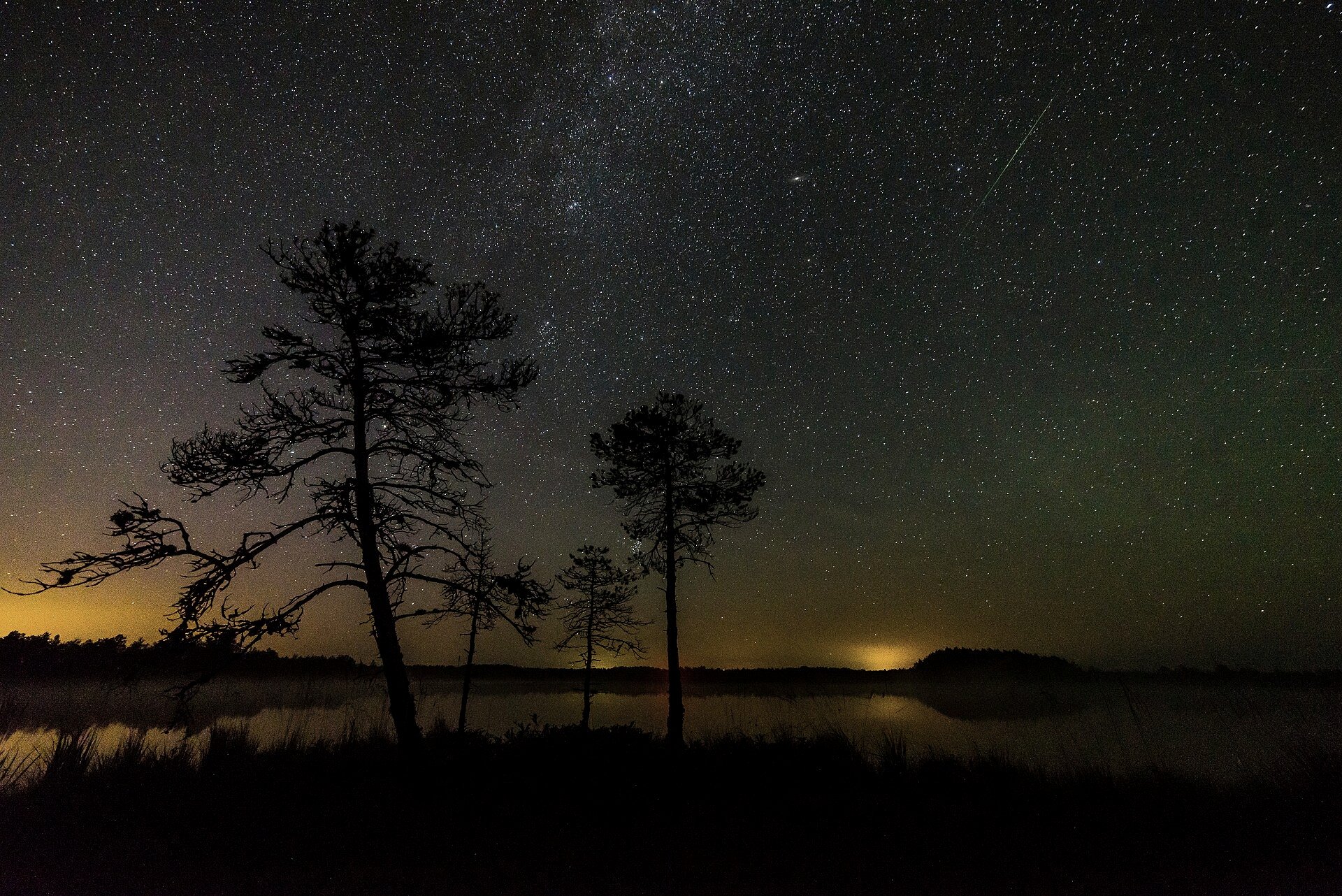
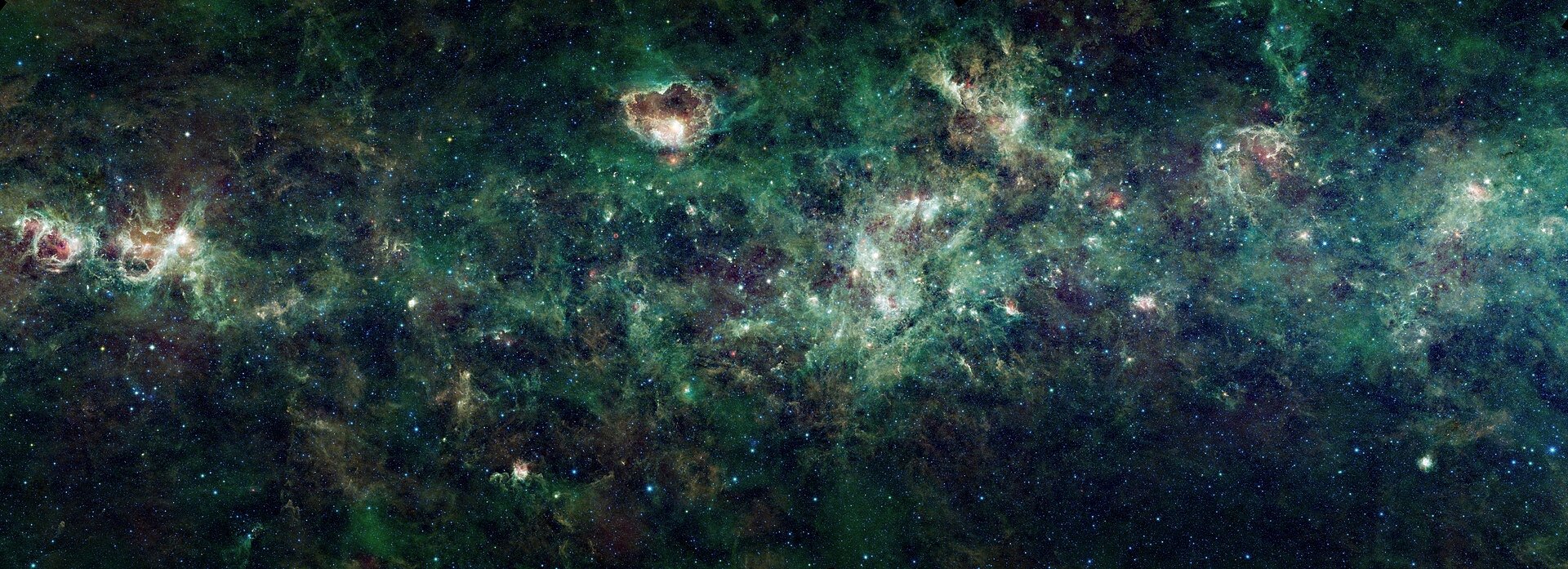
Pine trees under a starry sky, a meteor streaking at upper rightAn infrared telescope view of dust clouds in the Milky Way