Stocks and Markets Desk · Weekly Dispatch
Stocks and Markets
A peace-deal rally pushes US stocks near a record and Japan past 70,000 for the first time. What the numbers mean, in plain English.
A weekly intelligence brief
Stocks and Markets Desk · Weekly Dispatch
A peace-deal rally pushes US stocks near a record and Japan past 70,000 for the first time. What the numbers mean, in plain English.
Weekly Intelligence Brief | Analyst Desk | 2026-06-16
When the Gulf war ended on 14 June, money celebrated. A relief rally swept the world's stock markets, which simply means prices jumped now that a big danger had passed. America's S&P 500, the main scoreboard of 500 large US companies, climbed back near a record. Japan's market briefly passed 70,000 points for the first time ever. Oil, which had spiked during the war, fell almost 5 percent. And the gauge traders use to measure fear dropped to a calm reading.
Here is what those numbers mean. A stock index is just a basket of big companies tracked as a single number, so you can tell at a glance whether the market is up or down. That fear gauge is called the VIX: below 20 means traders are calm, above 30 means they are scared, and it just fell to 16. When a market sets a record while the fear gauge is this low, investors are feeling confident, sometimes too confident, because there is little cushion left if bad news hits.
Underneath, the world's central banks pulled in different directions, and that matters for shares. When a central bank raises interest rates it makes borrowing dearer, which tends to drag stock prices down; when it holds or cuts, it supports them. Europe and Japan raised rates into the oil shock, while the United States held steady. A falling US dollar, meanwhile, pushed a flood of money into the emerging markets, the faster-growing developing economies like Brazil, Thailand and India, whose shares had their best run in years.
What follows goes market by market: the United States, Europe, Asia, the emerging markets, and finally Russia and Israel. For each, what moved and what it actually tells you. Jump to any region above.
| Market | Where it stands right now |
|---|---|
| United States | Near a record and calm. The S&P sits just off its high and the fear gauge is low, even with inflation back up. |
| Europe | Cheaper and quieter. Steady gains held back by a slow economy and a surprise rate rise. |
| Asia | Japan is the star, at an all-time high. China is cheap, but stuck on shoppers who will not spend. |
| Emerging markets | The year's big winners, up about 24 percent, lifted mostly by a weak US dollar. |
| Russia & Israel | Two one-off stories: Russia's market is walled off by sanctions, while Israel's held firm through the war. |
A plain-English snapshot as of 16 June 2026. Levels move by the hour; treat them as a guide.
The S&P 500, the index of 500 big American companies, sits near a record after the peace rally. The plainest way to judge whether a market is dear is the price-to-earnings ratio, which tells you how many years of a company's profit you are paying for its shares. The US market is around 20, a little above its ten-year average, so it is priced richly but not crazily. The fear gauge is low. The catch is that all this calm sits on top of inflation that just jumped back to 4.2 percent and a government deep in debt. The market is pricing in the good news and very little of the risk.
One thing few people are watching: the US government is borrowing heavily right now, selling a wave of bonds (a bond is just an IOU that investors buy) at the very moment the Federal Reserve is signalling it will not cut interest rates soon. That slowly pushes up the government's own cost of borrowing, a problem that builds quietly rather than blowing up. The week's other landmark was the stock-market debut of the rocket company SpaceX, valued at around 1.75 trillion dollars, one of the largest ever.
European shares have risen this year but more gently than America's, and they are cheaper, paying for fewer years of future profit, partly because Europe has far fewer of the giant technology firms that drive US gains. The standout is Prague: the Czech market is up about 20 percent, carried by its banks and a strong dividend habit (a dividend is the slice of profit a company hands back to its shareholders each year).
The drag on Europe is its central bank, which surprised everyone by raising interest rates into a slowing economy to fight the oil-driven jump in prices. Higher rates help banks, which can charge more to lend, but they hurt almost everyone who borrows, so the wider European market has drifted sideways since the move.
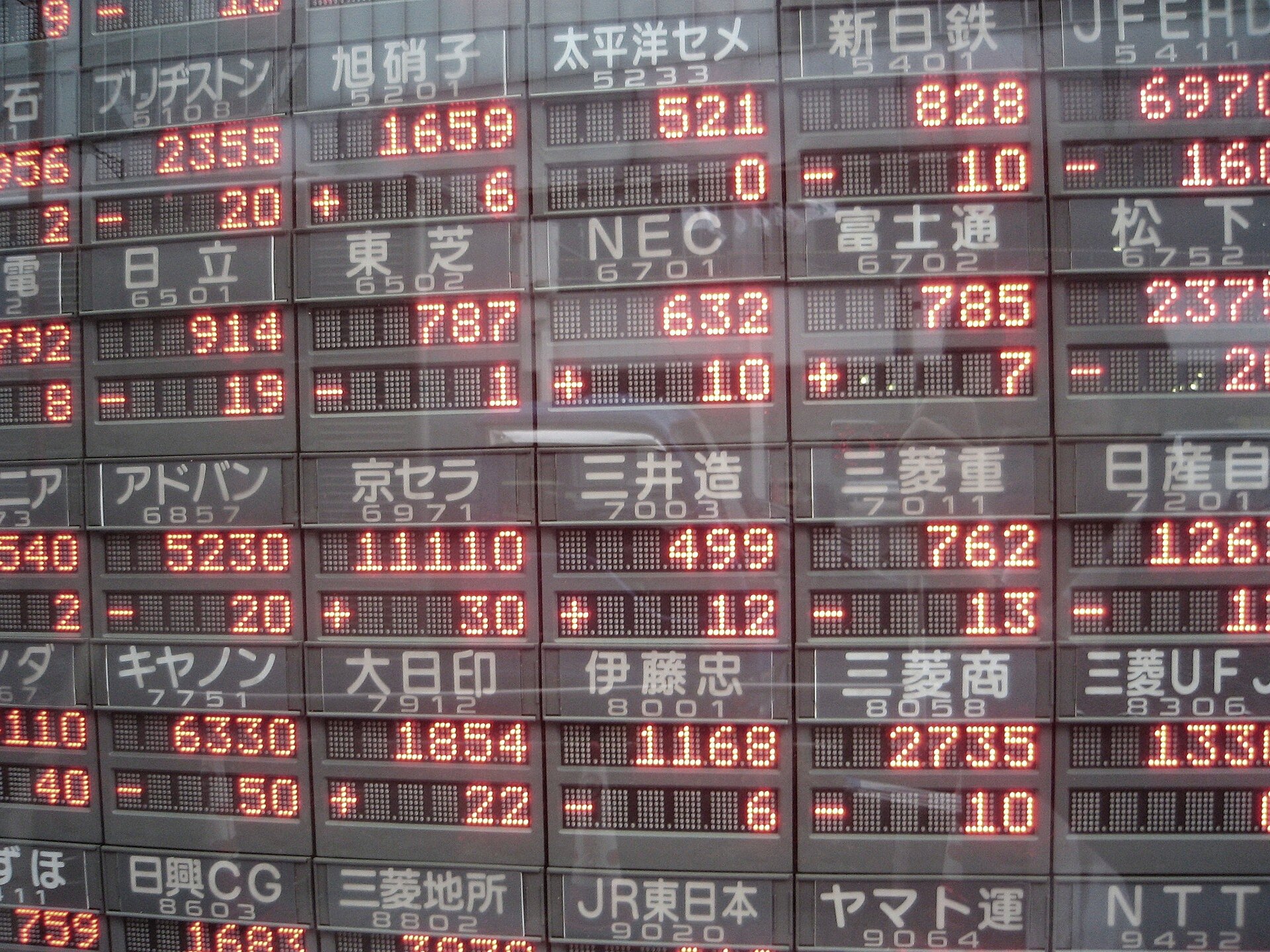
Japan is the year's big winner. Its Nikkei index passed 70,000 for the first time in history, a level it never reached even at the peak of its famous 1980s bubble, and it did so on the very day its central bank raised interest rates. Normally higher rates cool a stock market; Japan is treating this rise as proof that its long-awaited recovery is finally real. Whether that optimism lasts is the question hanging over the region.
China is the opposite. Its market is cheap, but cheap for a reason: shoppers are not spending, and for the first time since the pandemic retail sales actually fell. Thailand had a strong run earlier in the year as foreign money flowed in, but that tide is now turning back out as investors chase safer returns elsewhere.
Emerging markets is the label for fast-growing developing economies, from Brazil to India to Thailand. As a group their stock markets are up about 24 percent this year, near the top of their range. The engine is the falling US dollar. When the dollar weakens, money tends to flow out of America in search of higher returns abroad, and these markets are the main place it goes. Brazil has led the pack.
Argentina is the odd one out. Its market looks flat once you account for its weak currency, but it could jump if it is upgraded into the main emerging-market club that big funds track, because that would trigger a wave of near-automatic buying. It is the cheap corner of the room that could re-rate fast.
These two move on their own, apart from the rest. Russia's stock market is essentially walled off: sanctions keep foreign investors out, so it trades in its own bubble and is down about 8 percent this year, which says more about high local interest rates than about the companies themselves. Israel's market is the surprise, up about 18 percent even through a war, because its technology and defence firms held up and the peace deal lifted the mood.
The clean trade of the week was gold. As oil and the fear of war both fell, the shares of gold-mining companies jumped, because cheaper fuel cuts their costs while the price of gold itself stayed near records. Gold is the thing investors run to when they are nervous, and a little of that nervousness lingers under the rally.
If the peace holds, the likely path is a slow grind higher: oil keeps falling, inflation cools over the summer, and markets drift up in a calm, low-fear mood. The danger in that picture is complacency, because a fear gauge this low leaves almost no cushion if something goes wrong.
If the deal breaks and the oil strait closes again, the move reverses fast: oil jumps, inflation returns, fear spikes, and the markets that depend on cheap oil (Thailand, Hong Kong) fall hardest while gold and energy shares lead. The first sign shows up in the oil price, not the stock averages.
A note for readers who follow this desk's cycle lens, kept strictly to pattern, not prediction. Pluto now sits in Aquarius, the sign of networks and machines, over a market whose leaders are artificial-intelligence firms and whose biggest new listing is a rocket-and-satellite company; the symbolism and the money point the same way. Jupiter, the planet of expansion and risk appetite, leaves cautious Cancer for bold Leo on 30 June, the kind of marker that tends to embolden speculation. None of this is a forecast. It is a pattern set beside the tape.
Checked against exchange data and financial press; native-language outlets are noted.
Prepared by the News Feed analyst desk. Checked against exchange data and local-language sources as of 16 June 2026. Numbers move; where we are unsure, we say so.