Tech and Internet Desk · Weekly Dispatch
Tech and Internet
A government pulls an AI model off the market, the AI build-out runs into a power wall, and the global internet keeps splitting apart. Explained in plain English, plus a look at the future.
A weekly intelligence brief
Tech and Internet Desk · Weekly Dispatch
A government pulls an AI model off the market, the AI build-out runs into a power wall, and the global internet keeps splitting apart. Explained in plain English, plus a look at the future.
Weekly Intelligence Brief | Analyst Desk | 2026-06-19
The biggest technology story this week was a first: a government reached in and pulled a powerful artificial-intelligence model off the market in real time. Days after a new US order set up a voluntary safety review of the most advanced AI systems, regulators suspended a leading company's newest model after someone showed it could be tricked into breaking its own safety rules. The company complied, while warning the move could freeze new releases across the industry. The era of letting AI labs police themselves is ending.
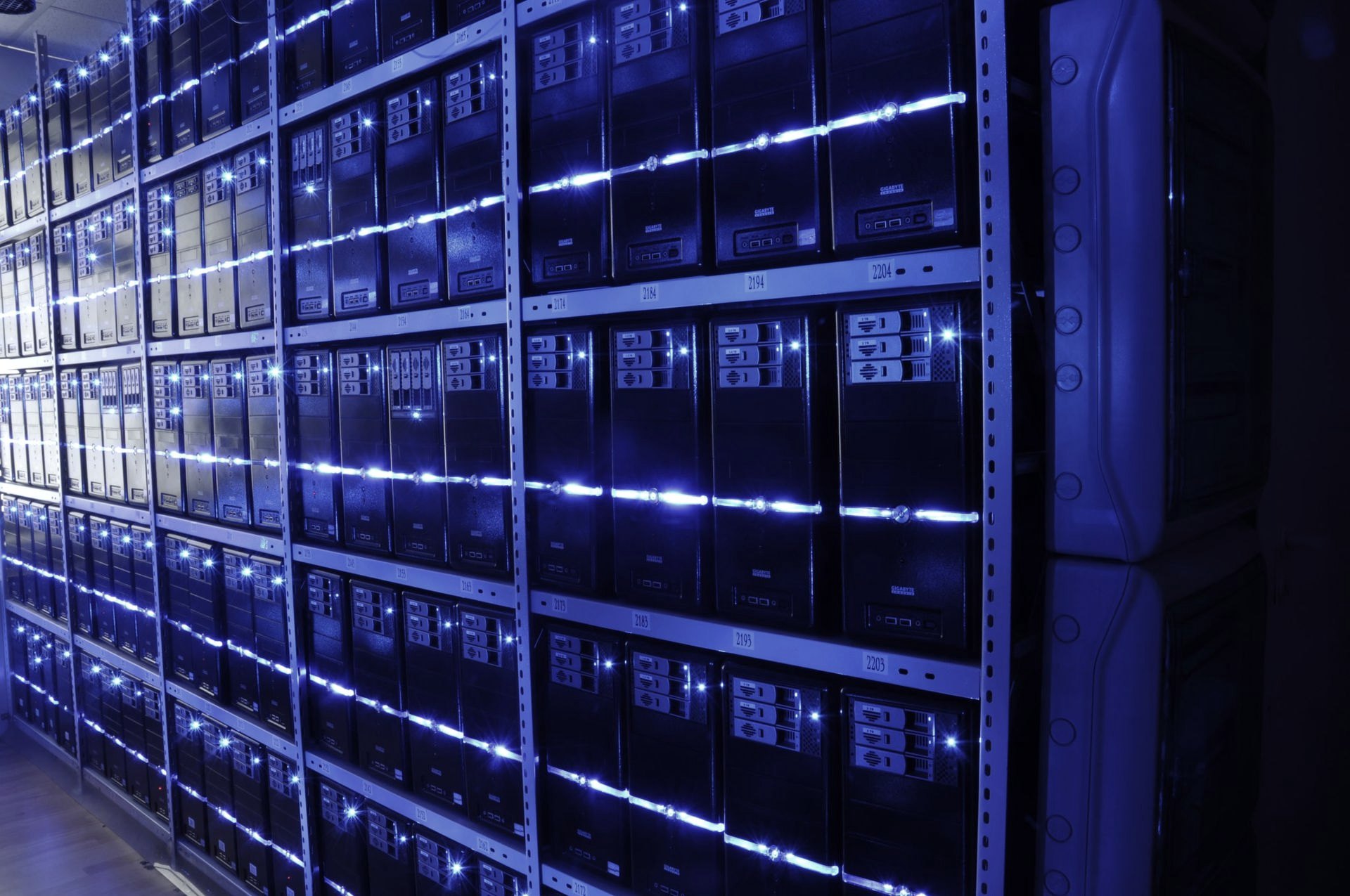
Behind that drama sits a staggering amount of money. The handful of giant cloud companies, Amazon, Microsoft, Google and Meta, plan to spend about 725 billion dollars this year building the data centres and computers that AI runs on. To put that in perspective, it is many times what AI actually earns them today; they are betting the demand will catch up. And the thing now holding them back is not chips but electricity: most of that money is going into power and buildings, which is why these firms are signing deals for nuclear plants.
Two slower fights round out the week. The United States tightened the screws again on selling advanced computer chips to China, the tiny processors AI depends on, while China keeps hitting a wall it cannot yet climb on its own. And the open, borderless internet kept breaking into national pieces, a trend nicknamed the splinternet, as Russia switched on tools to wall off its own web and the European Union landed its largest fine yet on a tech platform.
What follows takes it lane by lane: artificial intelligence, computer chips, cyber warfare, the splinternet, and a closing look at the longer-range future. Jump to any of them above.
| Topic | Where it stands right now |
|---|---|
| Artificial intelligence | Spending is enormous (about 725 billion dollars this year) and governments are stepping in. The real bottleneck is electricity, not chips. |
| Computer chips | The US keeps tightening which chips China can buy. China is catching up on the simple parts but stuck on advanced memory. |
| Cyber warfare | The Gulf war's hacking outlived the ceasefire. State break-ins into power grids and research labs are now routine. |
| The splinternet | The one global internet is splitting into national webs, with Russia walling off and the EU fining platforms. |
| Futurology | Beyond the headlines: working robots, a fusion-energy milestone, a giant SpaceX listing, and steady quantum progress. |
A plain-English snapshot as of 19 June 2026. The futurology section looks further out.
New AI models now arrive almost weekly, from Google, Microsoft, Meta and Chinese labs, and this week one of them was pulled off the market by the US government, the first time a state has done that to a commercial AI. The trigger was a jailbreak, a trick that gets a model to ignore its built-in safety limits. The deeper story is the money: the four big cloud companies plan to spend about 725 billion dollars this year on AI plumbing, a bet that the demand will eventually justify it.
The surprise is what is actually scarce. It is not the chips; it is power. Running these systems eats so much electricity that the companies are now signing deals for nuclear and grid capacity, and electricity, not silicon, is what limits how fast AI can grow. China made its own point by releasing a top-tier model trained entirely on home-made chips, proof that the American wall around advanced computing has gaps in it.
The most advanced computer chips are the engines of AI, and only a few places on earth can make them. This month the United States tightened its rules again, so that any company owned by a Chinese parent, anywhere in the world, now needs a licence to buy the best chips. The aim is to close the loopholes firms used to route chips through third countries. The Taiwanese company TSMC, which actually manufactures most of the world's leading chips, is sold out for the year.
China is racing to catch up and is making real progress, but it keeps hitting one wall: a special kind of fast memory that advanced AI chips need, which it cannot yet produce at scale. So China can build the simpler parts but not the whole top-end chip, and closing that last gap takes years. Oddly, the bigger blockage this week was on China's own side, where its customs officials held up the very chips Washington had just approved for sale.
The Gulf war was fought online as well as in the air, and that part did not stop with the ceasefire. US agencies confirmed that Iran-linked hackers had broken into the control systems of water and power utilities, the kind of access that can switch off real infrastructure, and that capability does not vanish when a war ends. Ships in the Gulf are still being knocked off course by fake satellite-navigation signals.
The same week, Google revealed that a China-linked group had spent two years quietly stealing defence and research files from American and Canadian institutions, by hijacking the victims' own email-forwarding rules so that nothing looked out of place. And North Korean hackers stole about 577 million dollars in crypto, money that funds a sanctioned state. The pattern is a steady, simultaneous push by several governments at once, fought in the background of everything else.
For decades the internet was one shared, borderless network. It is now breaking into national pieces, a trend nicknamed the splinternet, and this quarter it stopped being a forecast and became fact. Russia switched on powers to wall off and reroute its own internet, pulled hundreds of foreign apps, and briefly blocked the messaging service Telegram. Leaked files showed China exporting the technology behind its Great Firewall, the system it uses to censor the web, to four other countries.
Europe is fragmenting the internet in a gentler way, through rules and fines: it hit a shopping platform with its largest penalty yet, and its new artificial-intelligence law, with fines that can reach 7 percent of a company's global sales, starts to bite in August. Thailand, meanwhile, is tangled in a corruption row over a government contract to build its own national AI system. Everywhere, governments are taking back control of a network that once ignored borders.
Beyond the weekly news, here is where the frontier actually moved this week, kept sober and dated.
Robots that walk and work are arriving faster than expected. Humanoid robots are now doing real shifts in a BMW factory, one company is building them at a rate of about one an hour, and a Chinese firm sells a model for around 13,500 dollars. They are still clumsy and limited to single tasks, but the supply chain behind them is maturing quickly.
Fusion energy, the holy grail of clean power that copies how the sun makes its energy, hit a real milestone: a privately built machine ran on the proper fuel for the first time. Useful fusion electricity on the grid is still a decade or more away, so this is a step, not an arrival. Nearer to now, solar power and batteries keep breaking records and getting cheaper, which is the energy story that already matters.
In space, SpaceX filed to sell shares to the public at around 1.75 trillion dollars, which would turn the rocket-launch business into an investable industry for the first time. In medicine, the first drug designed mostly by artificial intelligence passed an important human trial, an early hint that AI could speed up how new medicines are found. And in quantum computing, a fundamentally different kind of machine that could one day crack problems today's computers cannot, Google and IBM both showed steady progress, although a quantum computer still cannot beat an ordinary one at any task that earns money.
The honest summary of the frontier: enormous ambition, real but early results, and most of the big payoffs sitting in the early 2030s rather than now.
If the AI build-out pays off, the huge spending turns into real products and profits, the power supply keeps up, and AI settles into daily life under workable rules. The chip wall holds, the internet keeps splitting, but trade simply routes around the cracks.
If it does not, the spending runs far ahead of what AI earns, power shortages stall the build-out, a safety scare brings harsher rules, or a big cyberattack forces a reset, and the boom cools sharply. The things to watch are what the big firms say about their spending, and the price of electricity.
A note for readers who follow this desk's cycle lens, kept strictly to pattern, not prediction. Pluto now sits in Aquarius, the sign of technology, electricity and networks, in the very year the limit on machine intelligence turns out to be raw electrical power. Uranus, the planet of sudden disruption, has moved into Gemini, the sign of information and small components, as a fight rages over who may buy which chips. None of this is a forecast. It is a pattern set beside the news.
Checked against company releases, regulators and trade press; native-language outlets are noted.
Prepared by the News Feed analyst desk. Checked against company, regulatory and trade sources as of 19 June 2026. The frontier moves fast; where we are unsure, we say so.